Salina, EOLIA's Home
The island of Salina, green heart of the Aeolian Islands, is the terroir where EOLIA's fine wines are born
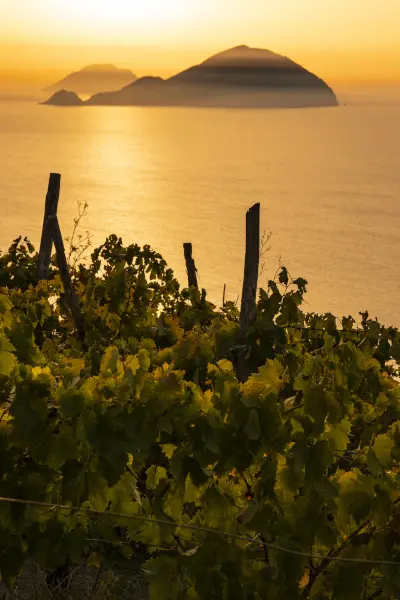
The island of Salina is EOLIA's home: a lush, green heart of the Aeolian Islands, amid volcanoes, sea, and wind.
Salina is the island where wind, sea salt, and sun meet, where natural beauty dazzles in every month of the year. Salina is both the inspiration and the home of EOLIA’s operation and growth.
A magical place that alternates hills with cliffs plunging into the sea, stretches of prickly pear cactus, and caper plants growing wild almost everywhere.
Salina is the most fertile and water-rich of the seven Aeolian sister islands, which makes it possible to grow the fine grapes behind the famous "Malvasia delle Lipari," a storied, sweet dessert wine. Salina, land of Malvasia di Lipari: here, this remarkably versatile grape variety takes on salinity, complexity, and mineral notes that make the grapes ideal for producing surprising white wines.
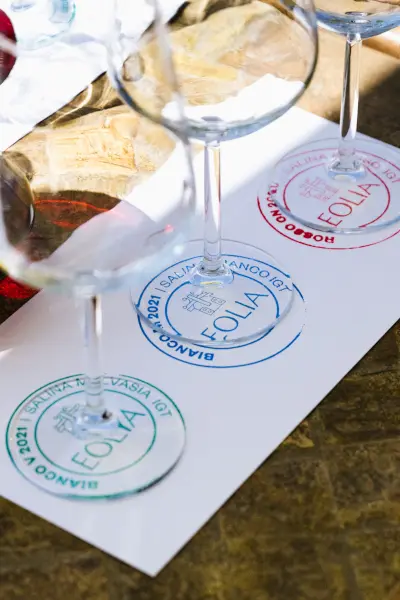
EOLIA stands out with its 100% Malvasia, which becomes "Bianco V" in the bottle: a table wine with fresh character, offering a creative and sophisticated take on an ancient winemaking tradition. Full of charm, EOLIA's "Bianco V" is a distinctly aromatic wine.
Salina, the Green Island Forged by Sea and Volcanoes
Salina covers an area of 26.8 square kilometers. Deeply green and rich in scenery, the island envelopes visitors in its slow pace and its ancient magic.
Formed by six dormant volcanoes, it is home to the first- and third-highest peaks in the Aeolian archipelago: Monte Fossa delle Felci (961 meters) and Monte dei Porri (860 meters), with its typical conical shape. The island of Salina has a complex geological history, marked by two distinct periods of volcanic activity separated by a very long period of dormancy.
Salina is crossed by a valley that divides it into two parts: this distinctive shape gives it a singular appearance — a single island that looks like two separate, neighboring ones. This feature earned it the name "Didyme" (twin) from the Greeks, while its current name, "Salina," comes from a small lake in the hamlet of Lingua, from which salt was once extracted.
Archaeological excavations have uncovered traces of settlements on the island dating back to the Bronze Age, followed by periods of abandonment. In 1980, the Salina Regional Park was established, followed in 1981 by the Nature Reserve of the two mountains.
Winemaking History on Salina
EOLIA is a young project, born in 2020, yet connected to the ancient winemaking history of the island of Salina.
Here, wine is a powerful, age-old symbol. The result is an innovative, dynamic expression of flavors that traces back into the mists of time.
The history of wine on Salina has been intertwined with that of the Aeolian Islands for about 6,000 years, and archaeological digs on Salina and Filicudi have uncovered charred grape seeds of Vitis vinifera dating back at least 4,000 years. An archaeological excavation in 1999 at Portella di Salina uncovered carbonized grape seeds, dating back to 1450 B.C., inside hut "P" of a Middle Bronze Age village. On-site botanical studies revealed the presence of both wild Vitis vinifera and domesticated Vitis vinifera. Recent archaeobotanical evidence (the carbonized grape seeds from Portella) confirms that the presence of the vine and wine production in the Aeolian archipelago is indeed very ancient.
EOLIA and Sustainability
Choosing to be wine entrepreneurs on a fully sustainable path is an utmost priority for EOLIA.
For Natascia and Luca, producing wine on the island of Salina means protecting the land they come from — working toward a sustainable present while always keeping an eye on tomorrow.
EOLIA's concrete commitment to the land takes shape through careful, responsible business practices and choices that respect the local ecosystem, aimed at protecting the land and valuing its workers.
It means caring about people's wellbeing and supporting the local economy and jobs by hiring only farmers from the island of Salina to cultivate and tend the land.
It means reducing polluting emissions, using renewable energy, limiting water consumption, and carefully managing waste disposal.